
Mercedes-Benz Stage 1 Tune: What Changes and What to Check
What a Stage 1 tune changes on a Mercedes-Benz, what stays factory, what affects the result and what to check before you tune.
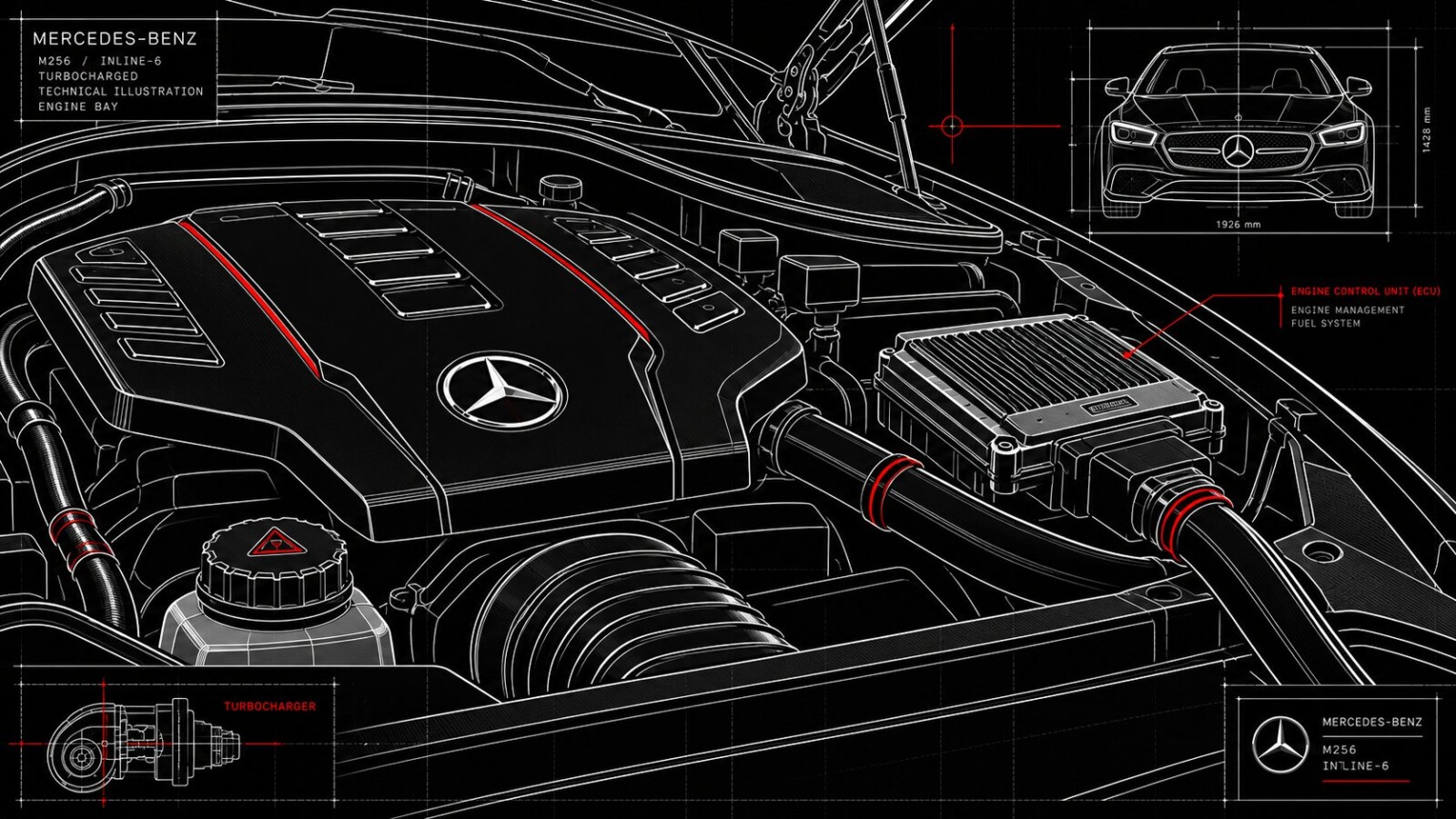
Table of contents
Whether you drive a C300, an E43 or an E450, the question before a Stage 1 tune is the same: what does it actually do to a Mercedes-Benz, and what should you know before buying one? The answer is less about horsepower figures and more about what changes in the engine software and what stays exactly as it left the factory.
Below: what a Stage 1 calibration changes, how it differs from Stage 2, what affects the result, how tuning at a workshop compares with a plug-in module, and which checks are worth doing first.
What Stage 1 means in tuning
Tuning stages describe how far a car moves away from its factory condition. Stage 1 is the first step: the engine, turbochargers, intake and exhaust stay stock, and only the calibration stored in the engine control unit (ECU) is changed. Nothing is unbolted, replaced or added under the hood.
Stage 2 combines a calibration with upgraded parts such as the intake, intercooler or exhaust, written to make use of the extra airflow. Anything beyond that usually means larger turbochargers or changes to the fuel system. The names are an industry habit rather than a formal standard, so tuners can define the details slightly differently.
Because no parts change, Stage 1 is the step most owners start with. It is also the step where the quality of the calibration matters most, since the software alone decides how much the stock hardware is asked to deliver.
What a Stage 1 calibration changes
The ECU runs the engine from maps: tables that decide how much boost, fuel and ignition advance to use at each combination of engine speed, load and pedal position. A Stage 1 calibration adjusts these targets within the limits of the stock hardware. It does not add new functions to the ECU; it changes the values the existing functions work with. The changes fall into two main groups, which affect the engine in different ways and are noticed by the driver in different situations.
Boost, fuel and ignition
On turbocharged engines, a higher boost pressure target is the main source of extra torque. More air in the cylinders allows more fuel to be burned, so the fuel quantity is raised to match, and the ignition timing is adjusted to keep combustion under control.
These three values are tuned together. Raising boost without adapting fuel and ignition would not give a safe or usable result, which is why a calibration is written as a complete file for a specific engine and software version rather than as a single changed number.
Torque delivery and throttle response
Factory software also contains torque limiters, which shape how power is delivered at different engine speeds and in different gears. Adjusting them changes how strongly the car pulls, especially at low and medium revs, where everyday driving takes place.
Throttle mapping decides how quickly the engine reacts to the accelerator pedal. A calibration can make the response more direct, which many drivers notice before any change in top speed. On some engines the rev limiter, the maximum engine speed, is adjusted as well.
Stage 1 compared with Stage 2
The difference between the first two stages is easiest to see side by side, because it affects not only the result but also the cost and the work involved:
| Aspect | Stock | Stage 1 | Stage 2 |
|---|---|---|---|
| Hardware | Factory | Factory | Upgraded parts, for example intake, intercooler or exhaust |
| Software | Factory calibration | Revised calibration | Calibration matched to the new parts |
| Installation | - | Software only | Workshop installation of parts plus software |
| Going back | - | Restore the factory software | Refit the original parts and software |
For a car that is driven every day, Stage 1 is usually the more practical choice: it keeps the factory parts, the factory software can usually be restored, and no workshop time is needed for hardware. Stage 2 makes sense for owners who already plan exhaust or intake upgrades.
What affects the result
Two cars of the same model can respond differently to the same type of calibration. These are the factors that make the biggest difference:
- The engine. Turbocharged engines respond more than naturally aspirated ones, and each engine family has its own limits.
- Fuel quality. The calibration is written for a specific fuel grade; use the premium fuel your Mercedes already requires.
- The condition of the car. Worn spark plugs, old oil or an existing fault reduce what a calibration can safely deliver.
- The software version. The same model can run different ECU software depending on the year.
Almost every current Mercedes-Benz and Mercedes-AMG engine is turbocharged, which is why software alone can make a noticeable difference on models such as the C300, E400, E43 or E450. Because of these variables, compare figures for your exact engine rather than general claims about "Stage 1 gains".
Workshop tune or plug-in module
A Stage 1 calibration can reach the car in two ways: a technician installs it at a workshop, or the owner installs it with a device prepared in advance. The software change itself is similar, but the process, the cost, the time involved and the way back to stock differ, so it helps to know both routes before choosing one.
Tuning at a workshop
A workshop tune means taking the car to the shop. A technician reads the factory software from the ECU, writes the revised calibration and often checks the result on the road or on a dyno. The price includes the calibration, the labor and the visit itself.
This route suits owners who live near a trusted tuner and want the work done for them. Ask in advance whether the original software is saved and whether returning to stock later is part of the service, because workshops handle this differently.
Tuning with a plug-in module
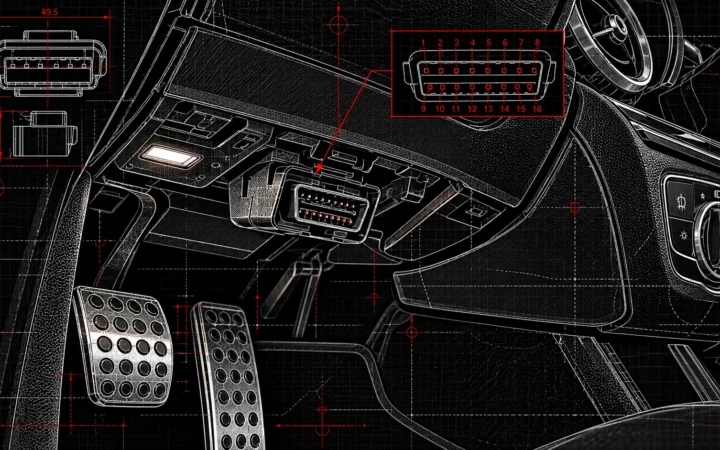
A plug-in module brings the calibration to the car instead. MWMods ECU Tune Stage 1 modules are hand-held devices prepared for one specific car. You connect the module to the OBD-II port, install the calibration and unplug it, without a laptop or special tools.
The module retains the option to restore the stock firmware, so the car can be returned to its factory calibration later if you decide to. MWMods ECU Tune Stage 1 modules currently cost from $600 to $1,200, depending on the model.
Checks before tuning
A few checks before any calibration go a long way. Working through them in this order avoids most of the problems owners run into after tuning:
- Confirm compatibility by VIN. The VIN identifies the exact engine and equipment, so the calibration matches your car - see why the VIN matters.
- Check the service status. Fix existing faults and catch up on spark plugs and oil before adding load to the engine.
- Think about the warranty. A dealer may decline warranty repairs it connects to a software modification.
- Check emissions rules. Federal law prohibits tampering with emissions controls on road vehicles, and California goes further: since July 2021, cars with engine software that is neither factory-supplied nor approved by a CARB Executive Order fail the Smog Check.
- Keep a way back. Make sure the factory software can be restored, as explained in going back to factory settings.
Together these checks answer three questions: whether the tune fits the car, whether the car is ready for it, and what happens if you want to undo it.
Conclusion
Stage 1 changes only the engine software and leaves every part of the car as it came from the factory. On turbocharged Mercedes engines, boost, fuel, ignition and torque limits are the main levers, which is why the quality and fit of the calibration matter more than any headline number.
Before tuning, confirm the exact engine by VIN, bring the service up to date and keep a way back to stock. If a plug-in module suits you better than a workshop visit, the MWMods team can check which calibration matches your car.